Pet-Friendly Arizona: Traveling With Your Dog in Sedona, Flagstaff, and Scottsdale
Arizona is an easy state to bring a dog to, as long as you respect the heat. Sedona in particular is one of the most dog-friendly places you can hike in the Southwest, with leashed dogs welcome on almost every red-rock trail. Flagstaff’s cool pine forests are a natural summer basecamp for a dog, and Scottsdale’s Old Town is full of patios where your dog can flop under the table while you eat. The one thing that trips up first-timers is the desert itself: pavement that burns paws, midday temperatures that overwhelm a panting dog in minutes, and a short list of hazards you will not find back home.
This guide covers the trail rules that actually matter in each town, where dogs are and are not allowed, the patios and pit stops worth knowing, the desert dangers owners underestimate, and how to book a rental that welcomes your dog instead of a cramped pet-fee hotel room.
The Short Answer Arizona is very dog-friendly, and Sedona is the standout. Leashed dogs are welcome on nearly every red-rock trail there and on most Flagstaff forest trails. The catch is heat. In Scottsdale and Phoenix, pavement and rock can burn paws, popular summit trails close during Extreme Heat Warnings, and Camelback Mountain bans dogs year-round. Hike at dawn, carry more water than you think you need, skip midday in summer, and book a pet-friendly rental with a yard. Do that, and your dog travels as easily as you do.
Dog rules by market at a glance
All three towns welcome dogs, but they play by different rules, and the difference comes down to elevation and heat. Sedona and Flagstaff sit high enough that dogs can hike most of the year. The Valley around Scottsdale and Phoenix is a cool-season dog destination that turns dangerous for paws in summer. Here is the quick version.
| Market | Trail dog rule | Heat picture | Watch for |
|---|---|---|---|
| Sedona (~4,500 ft) | Leashed dogs on nearly all Red Rock trails; leash max six feet at day-use sites; Red Rock Pass to park | Mild fall through spring; hot summer afternoons | Midday summer heat, creek algae, closures after fire or flood |
| Flagstaff (~7,000 ft) | Leashed dogs on most Coconino forest trails and at Buffalo Park; off-leash at Thorpe Bark Park | Cool all year; the best summer base for a dog | Afternoon monsoon storms, thinner air at elevation |
| Scottsdale / Phoenix (~1,100 to 1,500 ft) | Leashed dogs on many desert-preserve trails, but Camelback bans dogs year-round | Great November to March; dangerous May to September | Pavement and rock burns, summit-trail heat closures |
Trail access, passes, and closures change with conditions. Confirm current rules with the land manager (Coconino National Forest for Sedona and Flagstaff, City of Phoenix and City of Scottsdale for Valley preserves) before you head out.
Are dogs allowed on Sedona’s trails?
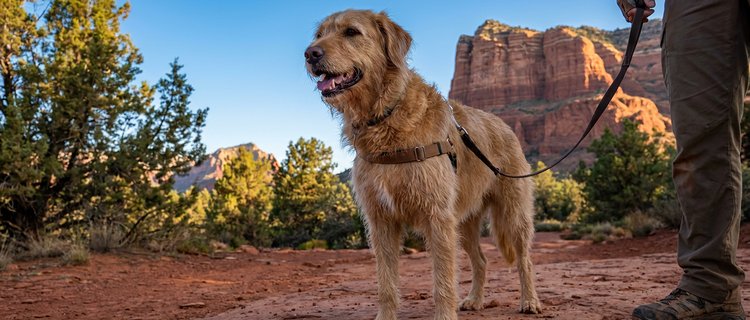
Yes, and this is Sedona’s quiet superpower for dog owners. Leashed dogs are welcome on nearly every Red Rock trail in the Coconino National Forest, including crowd favorites like Bell Rock, Cathedral Rock, Broken Arrow, Soldier Pass, Devils Bridge, and the creekside West Fork trail in Oak Creek Canyon. There is no special dog permit. You just follow the same rules people do: most day-use trailheads require a Red Rock Pass to park, and dogs must stay leashed, no longer than six feet at developed sites.
Two Sedona-specific notes save headaches. First, trailhead lots are tiny and fill by breakfast, so an early start is smart anyway, and early is cooler for your dog. Second, closures happen here more than people expect. Wildfire and flood have temporarily shut down Oak Creek Canyon and Dry Creek area trails in the recent past, so check current Coconino National Forest alerts before you commit to a specific hike.
If you are using the free trailhead shuttle to reach spots like Cathedral Rock or Soldier Pass, know the pet policy in advance. The Sedona Shuttle allows non-service dogs only if they ride in an appropriate carrier or wear a properly fitted muzzle and stay leashed and under control, out of the aisles. Service animals ride under ADA rules. Trailhead routes generally run Thursday through Sunday, roughly 7 a.m. to 5:30 p.m., with daily service during spring break and select holidays.
Hiking with your dog in Flagstaff
Flagstaff is the town to pick when the desert is too hot for a dog. At about 7,000 feet in the largest ponderosa pine forest in the world, summer highs sit in the low 80s while Phoenix bakes past 105°F, which means shaded trails and ground your dog can actually walk on. Leashed dogs are welcome on most Coconino National Forest trails around town, and the pine canopy does a lot of the heat management for you.
For an easy outing, Buffalo Park is the local favorite: an open meadow with a roughly two-mile loop, wide views of the San Francisco Peaks, and plenty of leashed dogs on any given morning. If your dog needs to burn energy off-leash, Thorpe Bark Park has separate areas for large and small dogs. Forest trails on the flanks of the Peaks, along the Arizona Trail, and out toward Walnut Canyon give you longer, cooler miles. One caution unique to elevation: afternoon monsoon storms roll in fast from July into September, bringing lightning and quick creek rises, so plan hikes for the morning and watch the sky.
Scottsdale and Phoenix: heat, pavement, and summer trail rules
The Valley is a cool-season dog destination. From late fall through early spring, Scottsdale and Phoenix are genuinely great with a dog, with sunny 70s, dog-friendly patios, and open desert-preserve trails. From May into September, the calculus flips, and the ground becomes the problem before the air does.
Here is the rule owners forget: when air temperatures hit the upper 80s, asphalt and dark rock can climb past 140°F, hot enough to burn paw pads in under a minute. A simple field test settles it. Press the back of your hand flat on the pavement for seven seconds. If you cannot hold it there, it is too hot for paws. On top of that, the City of Phoenix restricts its most popular summit trails, including Camelback’s Echo Canyon and Cholla trails, the Piestewa Peak summit, and several South Mountain routes, from 8 a.m. to 5 p.m. whenever the National Weather Service issues an Extreme Heat Warning. Those restrictions are for everyone, dog or not.
One more thing to plan around: dogs are banned year-round on Camelback Mountain, temperature aside, so scratch it off your dog’s list entirely. Plenty of other desert-preserve trails do allow leashed dogs, and our guide to Scottsdale and Phoenix hiking trails is a good place to compare options. In warm months, treat any Valley hike as a dawn-only activity, carry water for the dog, and turn back the moment the trail feels hot to your hand.
Rule of thumb If you would not walk it barefoot, do not ask your dog to. In a Valley summer, that usually means paws off the trail by mid-morning and back on shaded ground, or in the pool, by the time the sun is high.
Desert hazards owners underestimate
Most dog trouble in Arizona comes from a handful of desert-specific hazards that owners from cooler climates simply have not met before. None of them should keep you home. Knowing them keeps a fun trip from turning into a vet visit.
| Hazard | Why it is a risk | What to do |
|---|---|---|
| Heat and heatstroke | Dogs cool mostly by panting, which the desert overwhelms fast; signs include heavy drooling, wobbliness, and bright red gums | Hike at dawn, rest in shade, carry water, and cool a struggling dog immediately with water on the belly and paws |
| Hot pavement and rock | Surfaces can top 140°F when the air is only in the upper 80s, burning paw pads in seconds | Use the seven-second hand test, walk on shaded ground, and carry booties for rough or hot rock |
| Cactus and cholla | Jumping cholla segments cling to fur and skin on contact and are painful to remove | Keep dogs on the trail and leashed; pack a fine comb or pliers to lift out spines |
| Foxtails and grass awns | Barbed seed heads burrow into paws, ears, noses, and eyes and can migrate under the skin | Check paws and ears after every hike; avoid dry grassy patches, most common in late spring and early summer |
| Rattlesnakes | Active spring through fall, most at dawn, dusk, and on warm days, often resting beside trails | Keep dogs leashed and on trail, consider rattlesnake avoidance training, and know your nearest emergency vet |
| Blue-green algae | Warm, stagnant water can grow toxic cyanobacteria that is rapidly fatal to dogs that drink or swim in it | Keep dogs out of scummy, green, or still water; carry your own water so they are not tempted |
This is general safety guidance, not veterinary advice. If you suspect heatstroke, a snakebite, or algae exposure, contact a veterinarian right away.
Dog-friendly patios, breweries, and pit stops
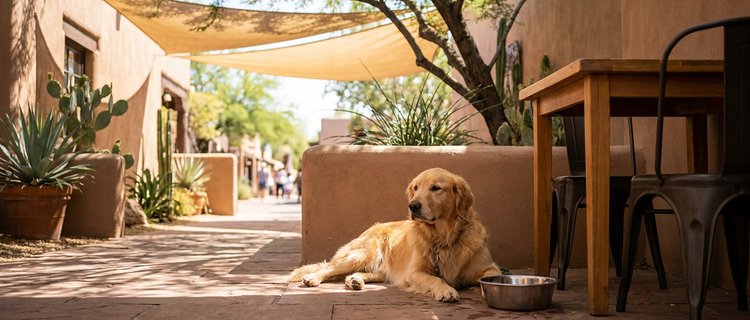
Once the trail is done, all three towns make it easy to keep your dog with you. Arizona’s patio culture and year-round outdoor dining mean a lot of restaurants welcome a well-behaved dog at an outdoor table. Policies change with ownership and season, so it is always worth a quick call ahead, but these are reliable starting points.
In Sedona, longtime dog-friendly patios include Creekside American Bistro, Hideaway House, the Secret Garden Cafe, Sedona Pizza Company, and Javelina Cantina, and the open-air Tlaquepaque Arts and Shopping Village happily welcomes leashed dogs among the galleries. In Flagstaff, the walkable downtown is built for it: Mother Road Brewing and Dark Sky Brewing both draw dogs to their patios, and spots like Diablo Burger, Satchmo’s, and Macy’s European Coffeehouse are easygoing about a leashed dog outside. For the full lineup, see our guide to Flagstaff’s breweries, several of which are patio-and-pup friendly. In Scottsdale, Old Town leads the way, with dog-welcoming patios at places like AZ 88, Arcadia Farms, True Food Kitchen, and craft-beer stops such as O.H.S.O. Brewery and Fate Brewing.
Water, booties, pet stores, and emergency vets
Pack for your dog the way you would for a desert hike yourself, then add water. A rough baseline is about one ounce of water per pound of body weight per day, and far more on an active day, so a collapsible bowl and extra bottles belong in every daypack. Booties or paw wax protect pads on hot or abrasive rock, a cooling mat or vest helps in the Valley, and a copy of vaccination records plus a current microchip and ID tag cover the unexpected.
For supplies, national pet-store chains are easy to find in Scottsdale, Phoenix, and Flagstaff, and Sedona has independent pet shops for the basics. The more important homework is medical: save the number and address of a nearby emergency veterinarian before you travel. The Phoenix metro has several 24-hour emergency and specialty hospitals, while Flagstaff, the Verde Valley, and Sedona have fewer, so knowing the closest option in advance matters most in the smaller towns. A quick search for your specific dates and location gives you current hours.
How to find a pet-friendly rental
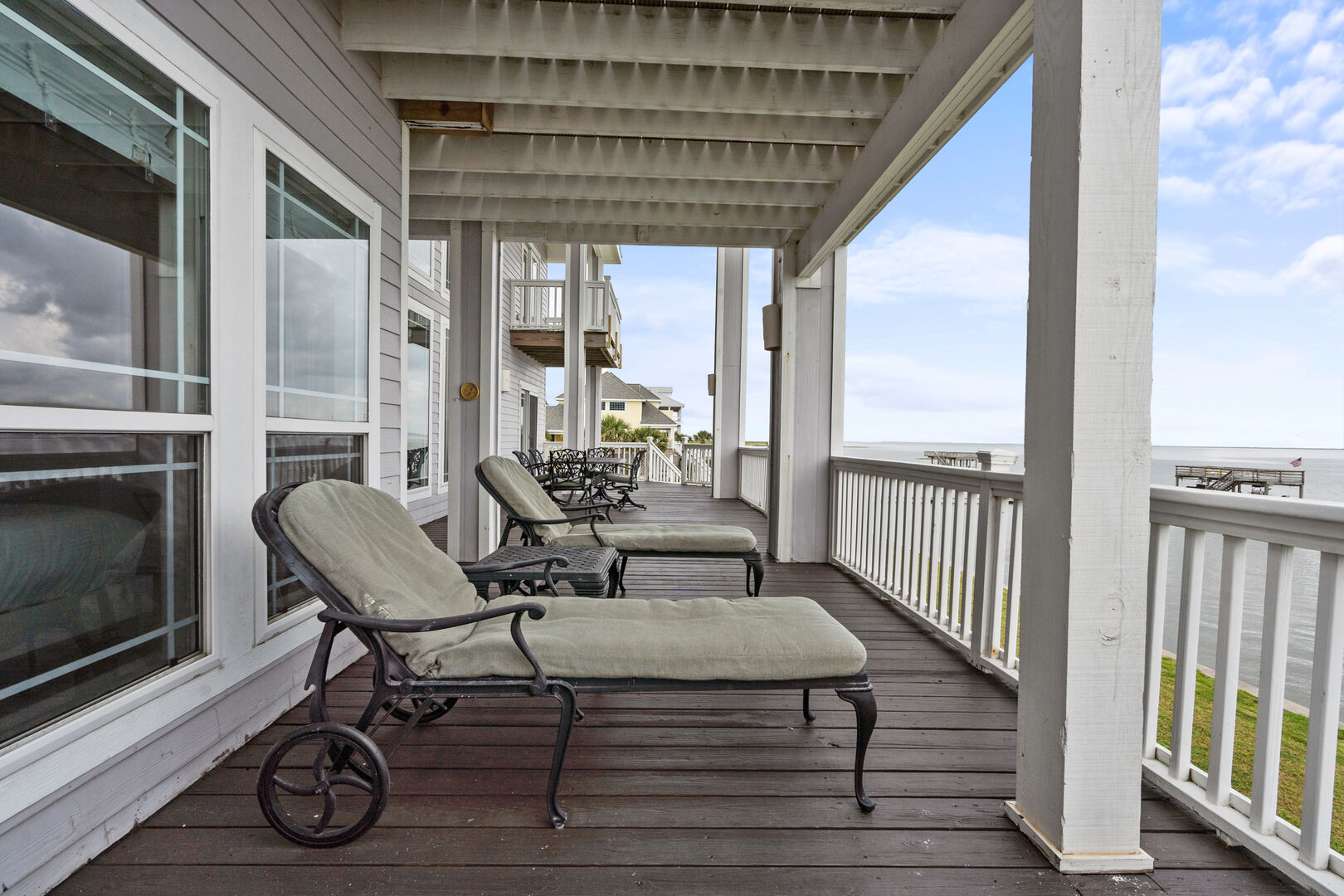
Book a home that actually welcomes dogs rather than tolerates them, and the whole trip gets easier. A rental with a fenced yard gives your dog a safe place to move and a shaded spot to rest between outings, which beats a small hotel room and a pet fee, especially when summer heat keeps you indoors midday.
To find one across these markets, open the search tool on the market’s rentals page and turn on the “Pets allowed” filter, then confirm the specifics before you book. Ask about any pet fee, a weight limit, and how many dogs a home accepts, since those vary property to property. It is a small step that avoids an awkward surprise at check-in, and it keeps these homes welcoming for the next dog owner who comes through.
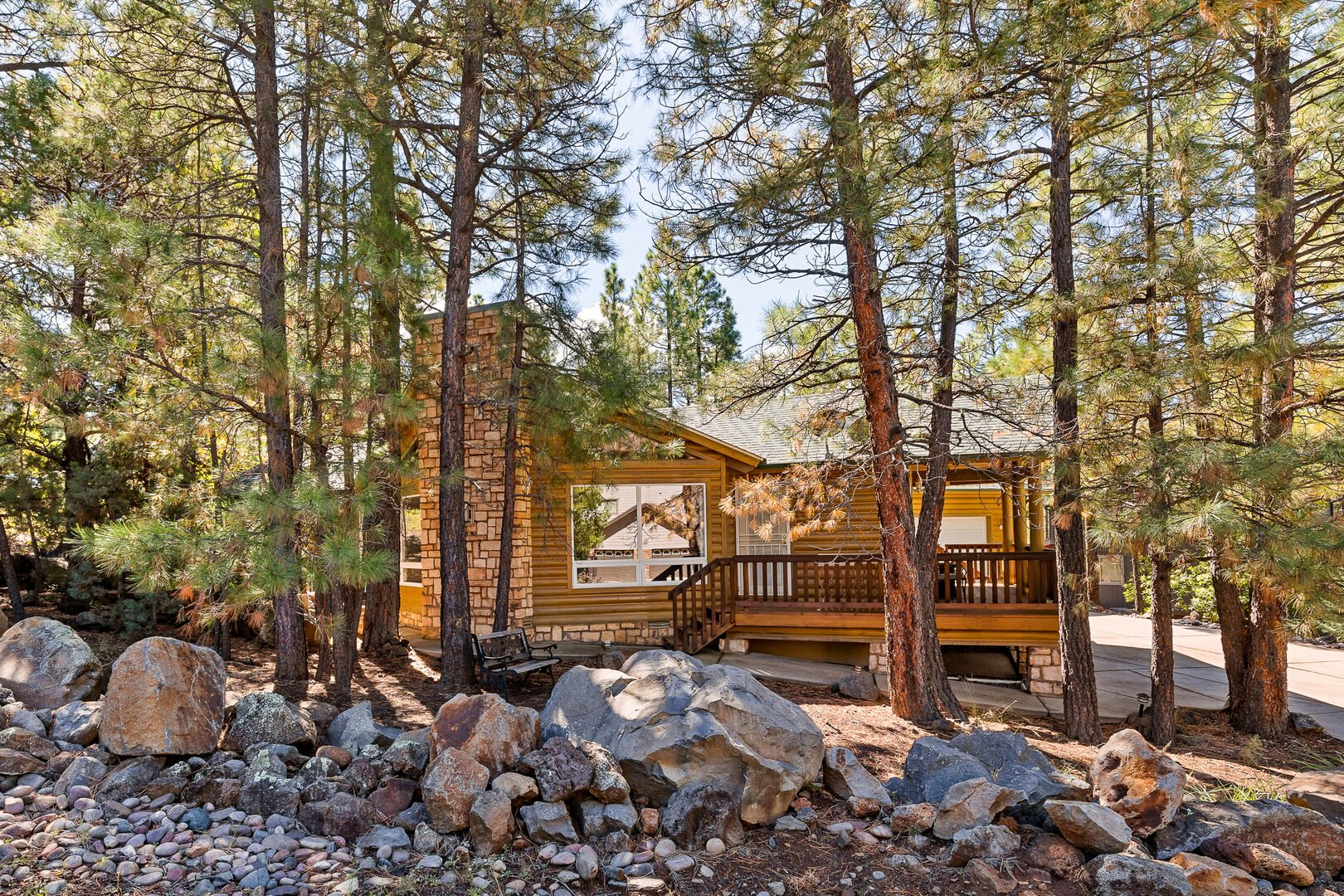
Good to know Porter manages pet-friendly homes across Sedona, Flagstaff, and Scottsdale, so you can base your dog wherever the trip takes you, from a red-rock casita to a pine-shaded cabin to a Valley home with a pool and yard.
Bringing the dog? Filter for the “Pets allowed” option and find a home with room to roam. Browse pet-friendly Sedona vacation rentals, Flagstaff vacation rentals, or Scottsdale vacation rentals for your dates.
Browse Pet-Friendly Arizona RentalsFrequently Asked Questions
Are dogs allowed on Sedona’s hiking trails?
Yes. Sedona is one of the most dog-friendly hiking destinations in Arizona, and leashed dogs are welcome on nearly every Red Rock trail, including Bell Rock, Cathedral Rock, Broken Arrow, Soldier Pass, and West Fork. Dogs must stay on a leash, no longer than six feet at developed day-use sites, and you may need a Red Rock Pass to park. Check current Coconino National Forest alerts before you go, since fire and flood closures happen.
Is it too hot to hike with a dog in Phoenix or Scottsdale?
In summer, usually yes. From roughly May through September, midday pavement and rock in the Valley can burn a dog’s paws, and popular summit trails close from 8 a.m. to 5 p.m. during Extreme Heat Warnings. Camelback Mountain bans dogs year-round. If you hike with a dog in warm months, go at dawn, stick to shaded or cooler-elevation trails, and turn back if the ground is too hot for your hand.
Which Arizona town is the most dog-friendly?
Sedona. Its Red Rock trails welcome leashed dogs, its milder elevation is easier on paws than the low desert, and many restaurants, patios, and shops happily accommodate dogs. Flagstaff is a close second thanks to cool pine-forest trails and an off-leash bark park. Scottsdale is very dog-friendly too, especially its Old Town patios, but the Valley’s summer heat limits daytime outdoor time from late spring through early fall.
Can I bring my dog on the Sedona Shuttle?
Yes. The free Sedona Shuttle allows non-service dogs if they ride in an appropriate carrier or wear a properly fitted muzzle and stay on a leash, under your control and out of the aisles. Service animals are welcome under ADA rules. Trailhead routes generally run Thursday through Sunday, about 7 a.m. to 5:30 p.m., with daily service during spring break and some holidays. Confirm the current schedule before you ride.
What desert hazards should dog owners watch for?
The big ones are heat and hot ground, which cause heatstroke and burned paw pads, so carry water and hike early. Watch for cactus and cholla spines, foxtail grass awns that burrow into paws and ears, and rattlesnakes, which are most active from spring through fall. Keep dogs away from warm, stagnant water, where blue-green algae can be deadly. Keeping your dog leashed and on the trail avoids most of these.
How do I find a pet-friendly vacation rental in Arizona?
Use the “Pets allowed” filter in the search tool on each market’s rentals page for Sedona, Flagstaff, or Scottsdale, then confirm any pet fee, weight limit, or dog count with the listing before booking. A home with a fenced yard gives your dog room to move and a cool place to rest between outings, which beats a cramped hotel room. Bring your dog’s records and clean up after them to keep these homes pet-friendly.