The Two Arizonas: There Is Always a Peak Season Somewhere
On this page
One state, two opposite clocks
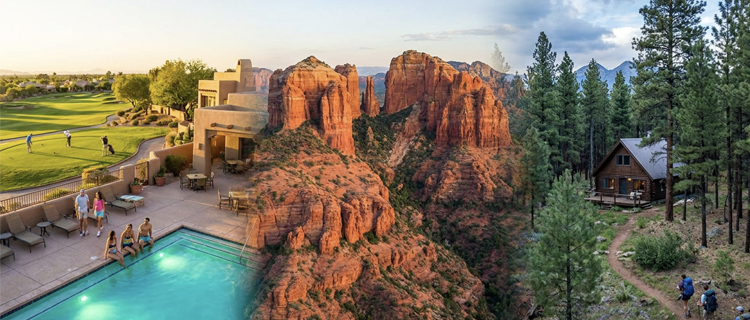
Arizona runs on two beautiful, opposite calendars. From November through April, greater Phoenix and Scottsdale put on one of the great winters in America: 75-degree fairways, packed patios, marquee events, and visitors who stay for weeks. Then the heat arrives, and the energy flows uphill. Flagstaff’s pines become the state’s air conditioning, and the same families who wintered in the Valley drive north for 80-degree Julys. Sedona, in between, rides its own twin peaks of spring and fall, when the red rocks are at their most photogenic.
For a homeowner, this is wonderful news wrapped in a puzzle. The wonderful part: whichever market your home is in, there is a season when it is the most desirable address in Arizona. The puzzle: each market’s calendar has a different shape, and a home priced without respect for that shape leaves its best weeks undersold and its quiet weeks empty. Seasonality is not a risk to endure. It is a rhythm to play, and playing it well is most of what revenue management is.
How to read your market’s rhythm
Here is each region’s year in one line. The Valley earns its living from November to April, peaks hardest around the winter events, and asks for creativity in the summer trough: long stays, value pricing, and pool-first locals. Flagstaff inverts it, selling the cool summer hard, riding winter snow weekends around Arizona Snowbowl, and resting briefly in the shoulders. Sedona splits the difference with two peaks, spring and fall, and a mild, lovely quiet in the deep winter that happens to make perfect owner time.
| Region | The big season | The second wind | The gentle stretch |
|---|---|---|---|
| Greater Phoenix and Scottsdale | November to April: winter visitors and marquee events | Fall patio weather, a local secret | June to August: long stays and value pricing |
| Sedona and Oak Creek | March to May: red-rock spring | September to November: golden fall | January: mild, quiet, perfect owner weeks |
| Flagstaff | June to August: the cool-air escape | December to February: Snowbowl weekends | April and November: easy owner months |
Capturing a peak completely means more than raising prices. It means holding rate confidently when demand is real, setting minimum stays so the biggest weekends go to the longest bookings, opening the calendar early enough for groups that plan a year out, and never selling a peak week in a panic. The quiet months have their own craft: longer stays, midweek travelers, and the owner weeks that make the whole arrangement feel like the best of both worlds, as we cover in the owner-use playbook.
Explore the year, month by month
Tap any month in any region to see what drives demand there and how a revenue manager plays it.
Arizona Season Explorer
Three regions, twelve months, and always a peak somewhere. See what drives demand in your market, month by month.
Below is the full 12-month demand read for all three Arizona regions. Enable JavaScript for the tap-a-month heat strip view.
Tap a month
Darker means stronger demand (each cell shows its 1-to-5 level). There is always a peak somewhere.
Greater Phoenix and Scottsdale · February
Peak of peaks: the WM Phoenix Open and perfect patio weather
Demand level 5 of 5. A revenue manager holds rate confidently and sets smart minimum stays here.
Greater Phoenix and Scottsdale
Sedona and Oak Creek
Flagstaff
Demand levels are illustrative and directional, grounded in each region’s real seasonal rhythm. Event names and timing shift year to year; Porter prices your actual calendar to live demand.
There is always a peak somewhere

Step back from the grid and one truth stands out: Arizona never stops. Somewhere in the state, right now, a season is peaking, and Porter’s revenue team manages homes across all three rhythms at once, from Scottsdale to Sedona to Flagstaff. That cross-market view matters: the team that just finished pricing a Valley event winter brings the same discipline to a Flagstaff summer and a Sedona fall.
Your job as an owner is simply to know your market’s shape and make sure your calendar is in hands that respect it, including the short-notice waves that smart calendars capture late. If your home’s peak is coming, the best time to get ready is a season early. See what your home could earn across its year, and let Porter’s owner team show you the plan for your market’s next peak.
Frequently asked questions
When is peak season for Arizona vacation rentals?
Why is Phoenix quiet in summer while Flagstaff is packed?
What does it mean to capture a peak season completely?
How should the quiet season be handled?
Do events really move rental rates that much?
How does Porter manage homes across different market rhythms?
Your market’s peak is coming
Get a free estimate and see the season-by-season plan for your home: the peaks to capture, the quiet months to work, and the weeks to keep for yourself.
Get your free income estimate or call our Arizona team at 866-468-2531