Flagstaff With Kids: A Four-Season Family Guide to Trains, Trails, and Snow
Most Arizona family trips fight the heat. Flagstaff lets you skip it. Sitting at about 7,000 feet in the largest ponderosa pine forest in the country, this mountain town runs 20 to 30 degrees cooler than Phoenix in July, then turns into a genuine snow-play destination by December. That range is the whole point for parents: the same drive gets you a cool-summer basecamp or a first real snowman, depending on the month.
This guide is built for families and sorted the way you’ll actually use it, by season and by kind of outing. It names the trains kids beg to ride, the flat trails little legs can finish, the safest place to play in the snow, and the museums that save a cold or rainy afternoon. It also covers the honest logistics that matter at this altitude: layers, water, and a house with room to spread out gear.
The Short Answer Flagstaff is a four-season family town at roughly 7,000 feet, so summers are a cool pine-country escape from Valley heat and winters bring real snow. In warm months, ride the Arizona Snowbowl scenic gondola, walk the flat Buffalo Park loop, and explore the Lava River Cave with headlamps. In winter, go tubing at the Flagstaff Snow Park and ride the Polar Express out of Williams. The Grand Canyon Railway, Bearizona, Lowell Observatory, and the Museum of Northern Arizona all work year-round. Pack layers, hydrate for the altitude, and book the train and snow tubing ahead.
Is Flagstaff good for kids?
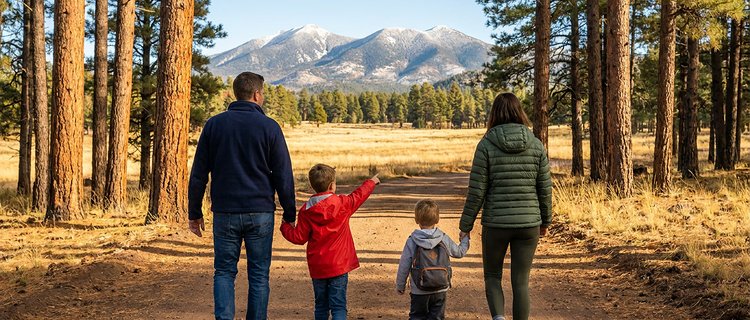
Yes. Flagstaff is one of Arizona’s best family towns precisely because it works in every season, and the altitude is the reason. At about 7,000 feet, it stays cool enough for midday hiking in summer while the Valley bakes, and cold enough to hold snow for tubing and skiing in winter. The San Francisco Peaks above town top out at Humphreys Peak, 12,633 feet and the highest point in Arizona, so there’s real mountain scenery behind every outing.
The practical upside for parents is variety within a small radius. Trains, a wildlife park, easy trails, a cave, museums, and a mountain gondola all sit inside about a 40-minute drive, so you can build a day around the weather and your kids’ moods instead of a fixed plan. The one thing to respect is elevation, which we cover near the end.
What to do, season by season
The best family activities in Flagstaff split cleanly by season, and knowing which is which saves you from driving to a closed gate. Summer and fall are for the gondola, trails, and the cave; winter is for snow play and the Polar Express; a few stops run all year. Use this table to match the trip to the calendar, then dig into each activity below.
| Season | Signature family outings | Book ahead? |
|---|---|---|
| Summer (Jun to Aug) | Snowbowl scenic gondola, Lava River Cave, Buffalo Park loop, the Arboretum, Grand Canyon Railway day train, Bearizona | Gondola and railway online; cave needs no booking |
| Fall (Sep to Oct) | Aspen color from the gondola, the Arboretum before it closes for the season, easy trails, the day train | Same as summer; Arboretum closes late October |
| Winter (Dec to Mar) | Tubing at the Flagstaff Snow Park, skiing at Snowbowl, the Polar Express out of Williams, indoor museums | Yes. Polar Express and snow tubing sell out |
| Spring (Apr to May) | Riordan Mansion, the museum, Lowell Observatory, the railway; snow lingers up high | Tour times at Riordan; otherwise walk up |
Seasons overlap and shift with the weather. Snow can arrive in November or linger into April, and warm-weather roads to the cave and the Arboretum are best once they dry out. Confirm current hours and conditions with each attraction before you drive.
Trains: the railway and the Polar Express
Trains are Flagstaff’s easiest family win, and both leave from Williams, about 35 minutes west on I-40. The Grand Canyon Railway runs a daily vintage train from the Williams depot up to the South Rim and back, a low-effort way to reach the canyon without a car full of restless kids. Onboard characters, musicians, and a staged train robbery keep the ride lively for younger passengers.
The Polar Express
The Polar Express is a nighttime holiday ride based on the Chris Van Allsburg book, and it is the single most popular family event in the region each winter. It leaves from the Williams depot behind the Grand Canyon Railway Hotel on select evenings from early November into late December (the 2025 season ran November 7 through December 30), with departures around 5:30 and 7:30 p.m. and a round trip of roughly 90 minutes. Kids wear pajamas, sip hot chocolate, eat a cookie, and meet Santa at the “North Pole.” Value-rate tickets start near $65 for adults and $50 for children, climbing on peak December dates. These sell out fast, often months ahead, so book as early as you can and treat weekend dates as the first to go.
Bearizona, right next door
Since you’re already in Williams, pair the train with Bearizona Wildlife Park on Route 66. You drive your own car slowly through enclosures of bison, wolves, and black bears, then park and walk the Fort Bearizona area with smaller animals and shows. It’s open year-round. Admission recently ran about $30 for adults and $20 for kids ages 4 to 12 on weekdays, a few dollars more on weekends, with children under 3 free. Confirm current rates when you plan.
Snow play near Flagstaff
The safest, simplest place to play in the snow near Flagstaff is a managed snow-play park, not a random pullout on a forest road. Flagstaff gets real winter snow, but conditions and plowing vary, so a dedicated park with groomed lanes and provided equipment is the low-stress choice for families with young kids.
Flagstaff Snow Park (tubing)
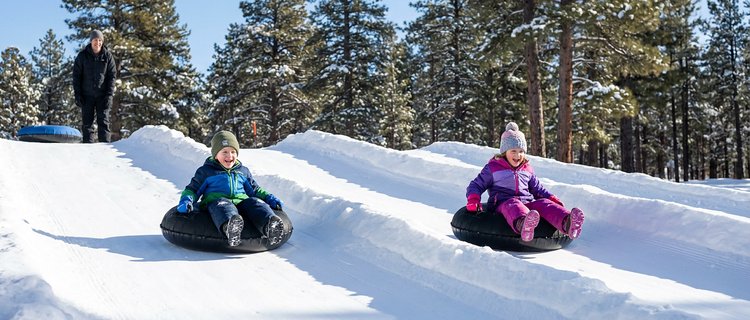
The Flagstaff Snow Park at Fort Tuthill, just south of town, is the area’s main tubing operation. It runs lift-served tubing lanes plus a gentler kiddie hill, and admission includes the tube and unlimited runs during your session. Sessions are typically a full day (9 a.m. to 5 p.m.) or an evening block (4 to 8 p.m.), and the park usually opens in mid to late December once there’s enough snow. Reservations are online and released only a few days in advance, so watch the calendar. Outside sleds aren’t allowed, it’s one rider per tube except on the kiddie hill, and children under 7 need an adult with them.
Skiing and the mountain
For downhill skiing and snowboarding, Arizona Snowbowl runs lifts and lessons through the winter season, generally opening once the snow builds in November. Note that Snowbowl is a ski resort, not a tubing hill, so it’s the pick for lessons and lift-served runs while the Snow Park handles the tubing. Snow conditions swing year to year in Arizona, so check the mountain’s current status and any road-traction requirements before heading up Snowbowl Road on a busy weekend.
Easy trails and summer outdoors
Flagstaff’s best family trails are short, flat, and shaded, which suits both small legs and the thinner air up here. Three stops carry a summer trip: a flat park loop, a lava cave, and a mountain gondola that does the climbing for you.
Buffalo Park
Buffalo Park on McMillan Mesa is the town’s go-to easy walk: a roughly 2-mile, nearly flat cinder loop across open meadow with big views of the San Francisco Peaks. The entrance is on North Gemini Road, it’s free, and the wide packed path handles jogging strollers and bikes. It’s the perfect first-morning leg-stretch to help everyone adjust to the altitude before anything harder.
Lava River Cave
The Lava River Cave northwest of town is an underground lava tube nearly a mile long, and it’s free to explore on Coconino National Forest land. Kids love that it feels like real caving, but treat it seriously: it’s undeveloped, with no lights, no rangers, and a rocky, uneven floor with low spots where you’ll duck. Bring at least two reliable light sources per person (a headlamp plus a backup), sturdy closed shoes, and a jacket, because the cave holds around 35 to 45 degrees even on a 90-degree day, with ice common near the entrance. The forest roads in are usually not plowed, so this is a late-spring-through-fall outing, not a winter one.
Snowbowl scenic gondola
When you want mountain views without a climb, the Arizona Snowbowl scenic gondola carries families up toward 11,500 feet in summer. It typically runs daily through the warm season, roughly 10 a.m. to 4 p.m., with demand-based pricing that can start low, and a short, easy interpretive walk waits at the top. On clear days you can see for miles toward the Grand Canyon, and the alpine air at the summit is a cool break on a hot afternoon. Fall riders catch golden aspen without hiking a step.
The Arboretum at Flagstaff
The Arboretum at Flagstaff is a low-key, hands-on outdoor stop for younger kids, with gardens, trails, and seasonal birds-of-prey programs. It’s open seasonally, roughly late April through late October, Wednesday through Sunday, and admission recently ran about $14 for adults and $8 for youth ages 5 to 17, with under-5s free. It sits down a few miles of partly unpaved forest road, so give yourself extra time and check conditions after rain.
Museums, a mansion, and the stars
Flagstaff has strong indoor and evening stops for a cold day or a tired afternoon, and all three below suit families. Keep them in your back pocket for weather.
Museum of Northern Arizona
The Museum of Northern Arizona on Fort Valley Road is the region’s best rainy-day anchor, with approachable exhibits on Colorado Plateau geology, dinosaurs, and the living cultures of the region’s Native nations. It’s open daily from 10 a.m. to 5 p.m., general adult admission recently ran around $15 with reduced rates for youth and seniors, and the scale is right for kids: enough to fill a couple of hours without wearing them out.
Riordan Mansion State Historic Park
Riordan Mansion is a 1904 log-and-stone Arts and Crafts home shown by guided tour, and older kids tend to like the peek into how a lumber family lived a century ago. You can walk the grounds on your own, but the interior is tour-only, so reserve a time slot. Grounds open at 9:30 a.m. in the summer season and 10:30 a.m. in winter; tours recently ran about $18 for adults and $12 for youth ages 7 to 13, with younger children free. Tours have limited capacity, so book ahead in busy months.
Lowell Observatory
For a memorable night out, Lowell Observatory pairs daytime exhibits and historic telescopes with evening stargazing under Flagstaff’s dark skies, the world’s first International Dark Sky City. It’s open most days into the late evening (recently around 1 to 11 p.m., closed Tuesdays), with telescopes opening near sunset. Dress kids in layers, since it gets cold once the sun drops at this altitude, and plan on a couple of hours.
Matching stops to ages
The surest way to keep a Flagstaff trip happy is to build the day around your youngest child. Here’s how the marquee stops sort by age.
- Toddlers and preschoolers: the Grand Canyon Railway day train, Bearizona’s drive-through, the Buffalo Park loop, the Arboretum, the kiddie tubing hill, and the gondola for the ride itself.
- Early elementary (about 5 to 9): the Polar Express, full tubing lanes at the Snow Park, the Museum of Northern Arizona, and the summit walk off the gondola.
- Older kids and teens (10 and up): the Lava River Cave with headlamps, beginner ski or snowboard lessons at Snowbowl, Riordan Mansion tours, and late-evening telescopes at Lowell.
Almost everything here scales down for a younger sibling, so mixed-age groups do fine as long as you keep hikes short and pack snacks.
Elevation, layers, and where to stay
Two things shape a Flagstaff family trip more than any single attraction: the altitude and the temperature swing. At 7,000 feet, kids tire faster and dehydrate quicker than they do at sea level, so push water, take the first day easy, and watch for headaches. The air is dry and the sun is strong, so sunscreen matters even in winter. And the daily swing is real: a 50-degree summer morning can hit the low 80s by afternoon, then drop back fast after sunset, so layers beat a single heavy coat in every season.
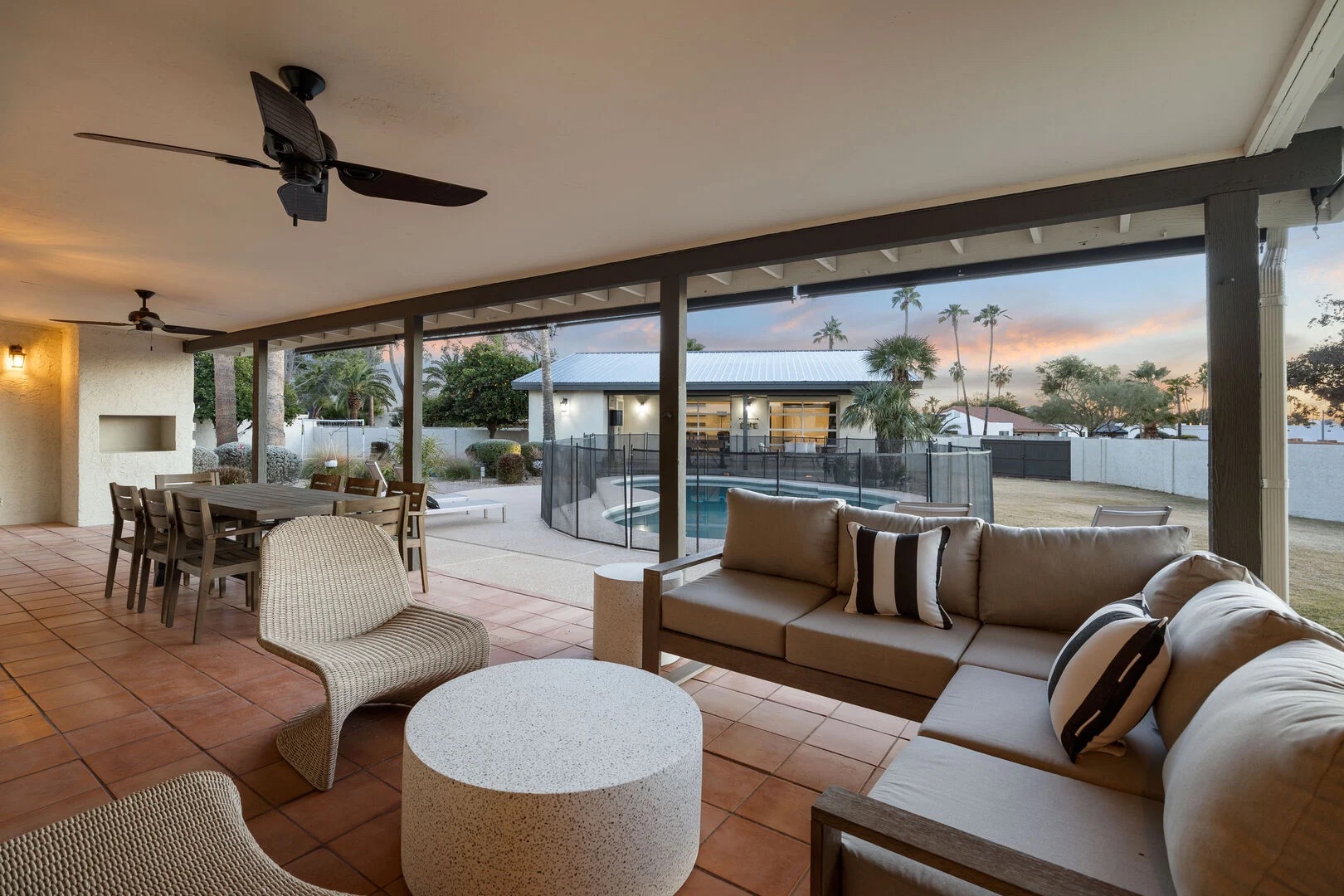
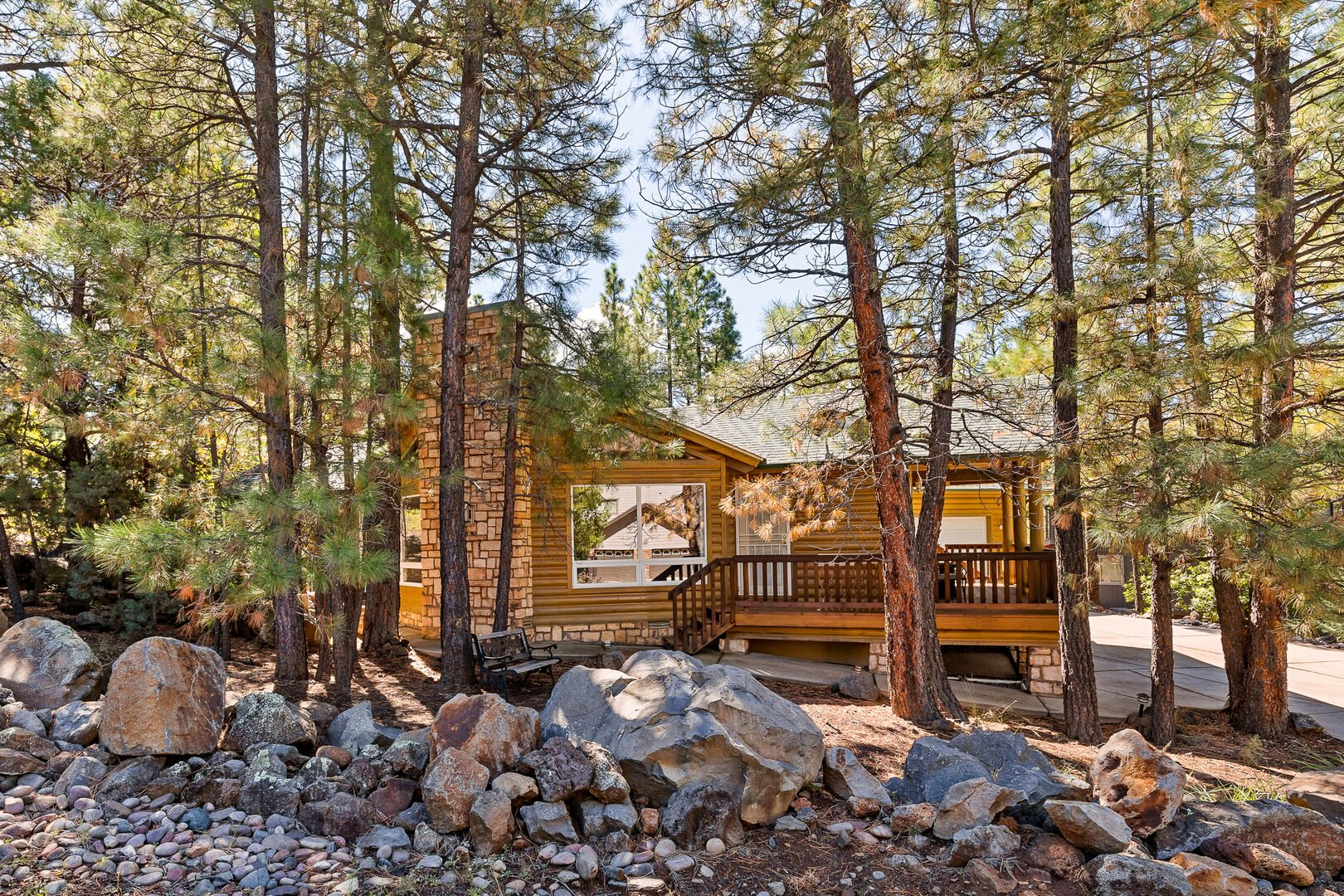
Where you stay does a lot of the work on a trip like this. A cabin or house with room to spread out means space to dry snow gear by the door, a kitchen for early breakfasts before the train, and a yard or game space for the hour when nobody wants to get back in the car. StayPorter’s Flagstaff vacation rentals include roomy, pine-country homes set up for exactly this, with the extra bedrooms and living space that make a multi-kid or multi-family trip feel like a break instead of a squeeze. Basing in or near town keeps you close to the museums and a short drive from Williams and Snowbowl Road.
Give the whole crew room to spread out. A larger Flagstaff home means space for snow gear, strollers, and tired kids between the train, the trails, and the snow. It beats packing a family into one hotel room after a big day at altitude.
Browse Flagstaff Family RentalsFrequently Asked Questions
What is there to do in Flagstaff with kids?
Plenty, and it splits by season. In warm months, ride the Arizona Snowbowl scenic gondola, walk the flat Buffalo Park loop, explore the Lava River Cave with headlamps, and visit the Arboretum. In winter, go tubing at the Flagstaff Snow Park or ski at Snowbowl, and ride the Polar Express out of Williams. Year-round stops include the Grand Canyon Railway, Bearizona, the Museum of Northern Arizona, Riordan Mansion, and Lowell Observatory. Almost everything sits within about a 40-minute drive of town.
Is Flagstaff good for a summer family trip?
Yes, and the cool weather is the main draw. At about 7,000 feet, Flagstaff runs roughly 20 to 30 degrees cooler than Phoenix in summer, so families can hike, ride the gondola, and explore the Lava River Cave comfortably at midday while the Valley is too hot. Bring layers for cool mornings and possible afternoon monsoon storms in July and August, push water at altitude, and use sunscreen. It’s one of Arizona’s most popular summer escapes for exactly these reasons.
Where can you play in the snow near Flagstaff?
The Flagstaff Snow Park at Fort Tuthill, just south of town, is the main managed tubing spot, with groomed lanes, a kiddie hill, and tubes included in the ticket. It usually opens in mid to late December once there’s enough snow, offers full-day and evening sessions, and requires reservations booked online a few days ahead. For downhill skiing and lessons, Arizona Snowbowl operates through the winter. A managed park is safer and simpler for young kids than an unmanaged roadside slope.
Is the Lava River Cave safe for kids?
It can be, with preparation, and it’s best for older kids and teens. The cave is an undeveloped, nearly mile-long lava tube with no lights, no rangers, a rocky uneven floor, and low ceilings where you duck. Bring at least two light sources per person, sturdy closed shoes, and a jacket, since it stays around 35 to 45 degrees year-round with ice near the entrance. Keep kids close and turn back anytime. The access roads usually aren’t plowed, so it’s a spring-through-fall trip.
What is the Polar Express and where does it leave from?
The Polar Express is a nighttime holiday train ride based on the children’s book, run by the Grand Canyon Railway. It leaves from the Williams depot, about 35 minutes west of Flagstaff on I-40, on select evenings from early November into late December. The round trip runs roughly 90 minutes, kids wear pajamas, and the ride includes hot chocolate, a cookie, a reading of the story, and a visit with Santa. Tickets sell out early, often months ahead, so book as soon as dates open.
How does the altitude affect kids in Flagstaff?
At about 7,000 feet, most kids feel the thinner, drier air, especially on the first day. Expect faster tiring, quicker dehydration, and the occasional headache. Take the first day easy, keep water flowing, and save strenuous outings for once everyone has adjusted. The dry air and strong sun also mean sunscreen and lip balm year-round. Families arriving from the Phoenix area or the coast should plan a gentle start, like the flat Buffalo Park loop, before anything demanding.
When is the best time to visit Flagstaff with kids?
It depends on what you want. Summer, June through August, is the top pick for a cool escape from Arizona heat, with the gondola, trails, and cave all open. Winter, roughly December through March, is best for snow play, skiing, and the Polar Express. Fall brings aspen color and thinner crowds, while spring is quieter but can still have snow up high and closed seasonal roads. Match the month to whether your family wants trails or snow.