A Perfect 3-Day Sedona Itinerary for First-Time Visitors
We have watched a lot of first-time Sedona plans go sideways, and they almost always fail in the same two ways: they cram four hikes into a day that only has room for one, and they schedule the marquee trails for mid-morning, when the lots are full and the slickrock is already baking. Sedona rewards the opposite approach. Hike at first light, when the rock is cool and the parking is yours. Tour or taste in the heat of the day. Keep your evenings loose for a sunset that will stop the conversation and a dinner you did not have to rush to.
This three-day plan is built for couples and small groups seeing Sedona for the first time, and it is the plan we hand our own friends. It front-loads the hard, popular hikes to early morning, parks the crowds and heat in the afternoon, and leaves each day with a little slack so you are not sprinting between red rocks. Times, food stops, and seasonal swaps are baked in. Follow it loosely and you will leave already planning the second trip.
The Short Answer Three days is enough to see Sedona’s highlights if you hike in the mornings and keep afternoons flexible. Day 1: arrive, get oriented on the Red Rock Scenic Byway, watch the sunset from Airport Mesa, then eat in Uptown or Tlaquepaque. Day 2: a sunrise hike at Cathedral Rock (or Devil’s Bridge), a midday jeep tour, and Verde Valley wine in the afternoon. Day 3: an easy Oak Creek Canyon morning at West Fork or Slide Rock before you drive home. Start hikes at or before sunrise to beat the heat and full parking lots.
The 3 days at a glance
Here is the whole plan in one view. The logic is simple: the physically demanding, parking-limited hikes happen at sunrise, the in-a-vehicle or sit-down activities fill the hot middle of the day, and evenings stay open for a view and a meal. Adjust the exact clock by season (see the timing section below), but keep the sequence.
| Day | Morning (early) | Midday / afternoon | Evening |
|---|---|---|---|
| Day 1: Arrival | Travel in, hotel or rental check-in, light orientation drive on SR-179 | Uptown stroll, easy scenic stop (Bell Rock or Chapel of the Holy Cross) | Airport Mesa sunset, then dinner in Uptown or Tlaquepaque |
| Day 2: Signature day | Sunrise hike: Cathedral Rock (short, steep) or Devil’s Bridge (the arch) | Midday jeep or off-road tour, then Verde Valley or Page Springs wine | Relaxed dinner, early night before Day 3 |
| Day 3: Oak Creek | Easy creek morning: West Fork Trail or Slide Rock State Park | Late breakfast or brunch, last Uptown browse | Drive home (or add a fourth day) |
Trailhead and parking conditions change with weather, wildfire, and post-fire flooding. Confirm current closures before each morning (see the Day 3 note and the linked forest and park sources).
Day 1: Arrive, orient, and the Airport Mesa sunset
Keep the first day low-effort. You are likely arriving from Phoenix (about two hours) or Flagstaff (about 45 minutes), so treat Day 1 as orientation, not a hiking day. Check in, drop your bags, and let Sedona introduce itself.
Orient yourself on the Red Rock Scenic Byway
Drive south on State Route 179, the Red Rock Scenic Byway, which threads past Bell Rock, Courthouse Butte, and the turnoff to the Chapel of the Holy Cross. Pull off at a viewpoint or two, walk the flat first stretch of the Bell Rock Pathway if you want to stretch your legs, and get a feel for how the town sits inside the rocks. This is also the drive that tells you which formations you want to hike tomorrow.
Browse Uptown and Tlaquepaque
Head into Uptown Sedona, the walkable strip of shops, galleries, and patios along SR-89A, then cross to Tlaquepaque Arts & Shopping Village, the Spanish-style courtyard complex on SR-179. The village’s shops and galleries generally run 10 a.m. to 5 p.m. Monday through Thursday and until 6 p.m. Friday through Sunday, and its restaurants keep later evening hours than the retail tenants. Confirm current hours on the Tlaquepaque hours page before you plan dinner around it.
Catch the sunset from Airport Mesa
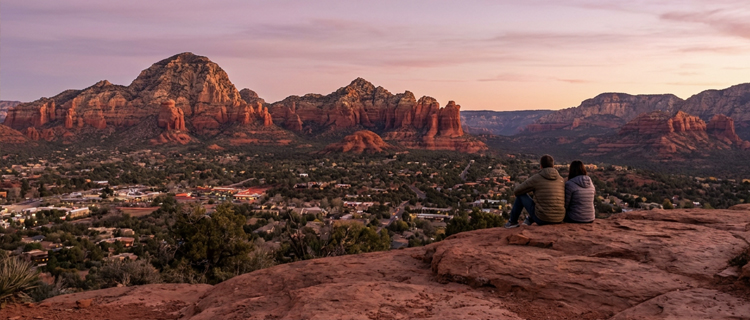
Airport Mesa is the classic first-night sunset because it is easy to reach and delivers a wide view over the whole red-rock basin. You have two options: the tiny free lot at the saddle (a short, steep vortex knoll climbs from there) or the paid Airport Vista overlook a little higher up the road. Both fill early. Arrive 45 to 60 minutes before sunset to get parking and a spot on the rocks. Sunset lands around 7:30 p.m. in midsummer and closer to 5:20 p.m. in December, so check the day’s exact time and work backward. Afterward, dinner in Uptown or at one of Tlaquepaque’s restaurants is a five to ten minute drive away.
Day 2: Sunrise hike, midday jeep tour, afternoon wine
This is the big day, and its whole design is to get the hard, crowded hike done before the sun and the crowds arrive, then shift to activities that are pleasant in the heat. Set an alarm. A sunrise start is the single best decision you will make on this trip.
Sunrise: Cathedral Rock or Devil’s Bridge
Pick one signature hike and do it at first light. Cathedral Rock is the more reliable choice for most first-timers: it is only about 1.2 miles round trip, but it climbs a steep slickrock chute (roughly 600 to 700 feet of gain) to a saddle view that many consider Sedona’s finest. The Back O’ Beyond Road lot is small and fills by mid-morning, so ride the free Sedona Shuttle (Route 15) instead of gambling on parking. Devil’s Bridge, Sedona’s largest sandstone arch, is the other icon; how you reach it depends on your vehicle, since the direct Dry Creek trailhead needs high-clearance four-wheel drive and the walk-in routes run roughly 4 miles round trip from the Mescal or Dry Creek Vista lots. Either way, be on the trail by sunrise. Confirm current routes and days with the Sedona Shuttle, since trailhead routes typically run Thursday through Sunday and can be suspended during closures.
Midday: a jeep or off-road tour
By late morning the trails are hot and busy, which is the perfect time to get off your feet and into a vehicle someone else is driving. A guided off-road tour is the Sedona activity that works best in the middle of the day: you cover dramatic terrain you cannot reach in a rental car, and a guide handles the driving and the history. Established operators like Pink Jeep Tours run several routes from Uptown, and the Broken Arrow tour to Chicken Point is the long-running favorite. Book a day or two ahead in peak season. Most tours run 1.5 to 3 hours, so you will still have your afternoon.
Afternoon: Verde Valley and Page Springs wine
Sedona sits at the edge of Arizona wine country, and the Verde Valley is an easy afternoon pivot. Page Springs Cellars in Cornville is about a 35 to 45 minute drive southwest and has a creekside tasting room open daily (Sunday through Wednesday 11 a.m. to 6 p.m., Thursday through Saturday 11 a.m. to 8 p.m.). Nearby Alcantara Vineyards and the cluster of tasting rooms in Cottonwood’s Old Town round out the scene. Pick a designated driver or book a wine tour van, and confirm hours and any reservation policy on the wineries’ own sites before you go. Prefer to stay closer? Tlaquepaque and Uptown both have tasting rooms if you would rather not drive out.
Day 3: An easy Oak Creek morning
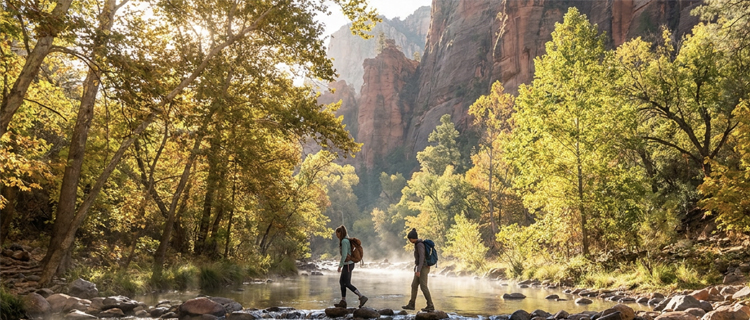
Keep the last day gentle and creek-focused, then point the car home. Oak Creek Canyon, the tree-shaded gorge that carries SR-89A north toward Flagstaff, is a cooler, greener counterpoint to the exposed red-rock trails, and it is the right note to end on before a drive. Two classic stops anchor this morning.
West Fork Trail
The West Fork Trail is Sedona’s most beloved shaded hike, following the West Fork of Oak Creek up a narrow canyon with 13 stepping-stone creek crossings over a roughly 3-mile-each-way maintained section. It is easy in grade, gorgeous, and the premier fall-color walk in the area (cottonwoods and maples usually turn gold from mid-October into early November). West Fork sits inside the Call of the Canyon day-use area and charges its own day-use fee, separate from the Red Rock Pass, so verify the current fee and hours.
Slide Rock State Park
Slide Rock State Park is the natural rock water slide in Oak Creek, best on a warm morning before the day-use lot fills. As of 2026, the park runs 8 a.m. to 6 p.m. from late January into late November (last entry and swim access close an hour before), with a shorter 9 a.m. to 5 p.m. window in deep winter. Day-use entry is per vehicle and seasonal: about $30 from May through September and $20 from October through April. Go right at opening on a summer day, since the lot caps out and closes to new cars when it is full. Check current hours and fees with Arizona State Parks.
Whichever you choose, keep it to a half day. Grab a late breakfast or brunch back in town, do one last Uptown browse, and leave with time to spare rather than rushing a checkout after a full hike.
Seasonal timing and pacing tradeoffs
The sequence above holds in every season, but the clock and a couple of swaps change with the calendar. The constant is this: the hotter the forecast, the earlier your hikes have to start.
| Season | Hike start | What to adjust |
|---|---|---|
| Summer (Jun to Aug) | At or before sunrise, no exceptions | Trails top 100 degrees by late morning. Do Cathedral Rock or Devil’s Bridge first thing, then jeep and wine indoors or in shade. Slide Rock’s creek is a highlight now. |
| Spring & fall (Mar to May, Sep to Nov) | Early morning, more forgiving | The mildest, most comfortable windows. Fall adds West Fork’s color; spring adds green and wildflowers. These are the easiest seasons to keep the plan relaxed. |
| Winter (Dec to Feb) | Mid-morning is fine; sunset is early | Cool, quiet, and often clear. Shift Airport Mesa sunset to around 5:20 p.m., lean into Oak Creek Canyon scenery, and expect occasional snow dusting the rocks. Some higher trails can be icy. |
Spring and fall are the mildest, least crowded seasons overall, which is one reason spring is often the best time to visit Sedona. In summer the whole plan lives or dies on that sunrise start. In winter you trade heat for short daylight, so front-load the sightseeing and enjoy how empty the trails are.
If you have a fourth day
Three days covers Sedona itself. A fourth day is best spent radiating out, because the region’s day trips are genuinely worth it. The Grand Canyon South Rim is about two hours north and doable in a long day. Jerome, the historic hillside mining town, and the Verde Valley wineries are both around 45 minutes away. Flagstaff, with Route 66, Lowell Observatory, and a strong brewery scene, is roughly 45 minutes up Oak Creek Canyon on SR-89A (check that the canyon corridor is open before you count on that route). Save the far drive for a day when you are not also trying to squeeze in a Sedona hike.
Where to base so early starts are easy
The whole itinerary rests on being able to reach a trailhead at sunrise without a long, sleepy drive. Basing centrally in West Sedona or the Village of Oak Creek puts you within a short drive of the shuttle park-and-ride lots and most major trailheads, so a 5:30 a.m. alarm actually turns into boots on the trail. A private home also gives a couple or a small group somewhere to spread out, cook a fast pre-hike breakfast, and soak tired legs in a hot tub after Cathedral Rock. StayPorter’s Sedona vacation homes and Sedona villas suit first-timers who want space and a kitchen over a hotel room, and longer stays can look at weekly Sedona rentals to spread the plan across more mornings.
One last thing before you go
Here is what three days in Sedona actually feels like when the plan works. You are on the Cathedral Rock saddle at 6:40 in the morning with the whole basin turning pink and maybe six other people, and you understand, all at once, why people get a little evangelical about this place. By lunch you are bouncing over slickrock in the back of a jeep laughing at how much your quads already hurt. By four you are on a creekside patio with a glass of Arizona red you did not know existed. And that night you are back at the house with the hot tub going, comparing photos, already arguing about which hike to do next time.
The house is the part people underrate. Every early start in this plan is easy when the trailhead is fifteen minutes away and the coffee is already brewing, and every big day lands softer when there is a kitchen, a couch, and a soak waiting at the end of it. StayPorter’s Sedona homes are set up for exactly this kind of trip, in exactly the neighborhoods this itinerary depends on. Pick one, set the alarm, and go meet the red rocks at sunrise. We will have the place ready.
Book the base that makes the early starts easy. A centrally located Sedona home puts you minutes from the trailheads and the shuttle lots, with a kitchen for the pre-hike breakfast and a hot tub for the legs afterward.
Browse Sedona Vacation RentalsFrequently Asked Questions
Is 3 days enough for Sedona?
Yes, three days is enough to see Sedona’s highlights as a first-timer. It gives you one signature hike, a jeep or off-road tour, a sunset at Airport Mesa, an easy Oak Creek Canyon morning, and time for food and browsing, without overpacking any single day. The key is hiking in the mornings and keeping afternoons flexible. If you also want a Grand Canyon or Jerome day trip, add a fourth day rather than cutting Sedona itself short.
What is the best day and time to hike Cathedral Rock?
Hike Cathedral Rock at sunrise on whichever morning your schedule allows, ideally early in your trip so you have a weather backup. The trailhead lot on Back O’ Beyond Road is tiny and fills by mid-morning, so take the free Sedona Shuttle (Route 15), which typically runs Thursday through Sunday. A first-light start means cool slickrock, open parking, and the saddle mostly to yourself. It is short, about 1.2 miles round trip, but a steep scramble, so wear grippy shoes.
Do you need a jeep tour in Sedona?
You do not need one, but a guided off-road tour is one of Sedona’s best midday activities and reaches terrain you cannot drive to in a rental car. It is especially worth it on a first trip and in hot weather, since a guide handles the driving while you are off your feet during the hottest hours. Operators like Pink Jeep Tours run several routes from Uptown, with the Broken Arrow trail the long-running favorite. Book a day or two ahead in peak season.
When should you do West Fork Trail?
Do West Fork on an easy morning, and ideally in fall for the color, when cottonwoods and maples turn gold from mid-October into early November. It is a shaded, gentle canyon walk with 13 creek crossings, so it works as a relaxed final-day hike before you drive home. West Fork sits in the Call of the Canyon day-use area and charges its own fee separate from the Red Rock Pass. Check current fees, hours, and any closures first, since Oak Creek Canyon can close after wildfire or flooding.
How early do you have to start hikes in Sedona?
In spring, summer, and early fall, start at or before sunrise. Two things drive this: the exposed red-rock trails heat up fast (summer regularly tops 100 degrees by late morning), and the small trailhead lots for Cathedral Rock and Devil’s Bridge fill within an hour or two of first light. An early start solves both the heat and the parking. In winter you have more leeway and can start mid-morning, but daylight is short, so plan sightseeing accordingly.
Is the Airport Mesa sunset worth it, and how early should you arrive?
Yes, Airport Mesa is the easiest high-impact sunset in Sedona and a perfect first-night activity, with a wide view over the red-rock basin. Arrive 45 to 60 minutes before sunset, because the small free saddle lot and the paid Airport Vista overlook both fill early. Sunset falls around 7:30 p.m. in midsummer and near 5:20 p.m. in December, so check the day’s exact time and work backward. Bring a layer, since it cools quickly once the sun drops.
Do you need a car for a 3-day Sedona trip?
Yes. Sedona has no meaningful public transit between its spread-out areas, and this itinerary involves driving to trailhead park-and-ride lots, Oak Creek Canyon, and the Verde Valley wineries. The free Sedona Shuttle covers a handful of the busiest trailheads, but you still need a car to reach it and to get everywhere else. Plan on driving, and factor a Red Rock Pass (about $5 per day) for parking where it is required.