Sedona Vortexes Explained: Where They Are and What to Expect
Ask a first-time visitor what they know about Sedona and “the vortexes” comes up fast, usually followed by a question they’re a little shy to ask out loud: is any of this real? It’s a fair question, and most of the pages that rank for it dodge it. This guide won’t. You’ll get an honest read on what a vortex actually is, where the four best-known sites sit, what people say they feel there, and how to visit without turning it into a chore or a letdown.
Here’s the short version before the details: you do not have to believe anything to have a good morning at these spots. All four sit at some of the prettiest, most walkable red-rock overlooks in the area, and the views hold up whether you feel a swirl of energy or just enjoy the quiet.
The Short Answer. A Sedona vortex is a place believed to hold concentrated spiritual or “earth” energy. It’s a metaphysical idea, not a scientifically measured one, so treat energy claims as belief, not fact. The four main sites are Airport Mesa, Cathedral Rock, Bell Rock, and Boynton Canyon. None require belief to enjoy: each is a scenic red-rock spot you reach on foot. Airport Mesa and Bell Rock are the easiest to reach, Cathedral Rock is a short steep scramble, and Boynton Canyon is a longer walk.

What a Vortex Is Said to Be
A vortex, in Sedona’s usage, is a spot where the earth’s energy is believed to be especially concentrated, in a way that people say supports meditation, healing, and self-reflection. A vortex is swirling centers of energy “conducive to healing, meditation and self-discovery.” That’s the definition the local tourism community uses, and it’s worth taking at face value: this is a spiritual concept with deep roots in Sedona’s New Age history, not a geological feature you can point a meter at.
In vortex tradition, sites are often sorted by the “direction” of their energy. Some are called upflow or masculine (said to feel energizing and expansive), some inflow or feminine (said to feel calming and introspective), and some a balance of both. You’ll hear guides and shop owners use that language freely. You don’t have to adopt it to follow along, but knowing the vocabulary helps you understand what people mean when they say one site “feels” different from another.
Are Sedona Vortexes Real?
There is no scientific evidence that vortexes exist as a measurable force, and no instrument reliably detects one. Claims that compasses spin wildly or that the “energy” bends tree trunks don’t hold up to careful testing. So if you’re asking whether a vortex is proven the way gravity or magnetism is proven, the honest answer is no.
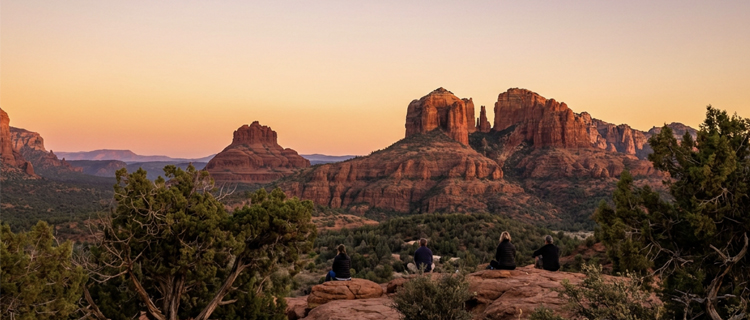
What’s also true: plenty of thoughtful people describe a genuine shift in mood at these spots, and that experience is real to them. Standing in a silent canyon at first light, or watching red rock catch the last sun, tends to slow anyone down. You can call that energy, or you can call it a beautiful place plus a quiet mind. Either way, the practical takeaway is the same. Go for the setting, keep an open and unhurried attitude, and let the rest be whatever it is for you. Nobody needs to convince you of anything for the trip to be worth it.
The Four Main Vortex Sites
Sedona has four widely recognized vortex sites, and they differ most in effort and crowd level, not in scenery (all four deliver). Airport Mesa and Bell Rock are the easy, family-doable options. Cathedral Rock asks for a short, steep scramble. Boynton Canyon is the longest walk of the group. Here’s the quick comparison, then a closer look at each.
| Site | Effort / distance | Getting there | Reported feel (belief) | Best for |
|---|---|---|---|---|
| Airport Mesa | Easy; short climb to the saddle knoll (Airport Loop is about 3.3 miles) | Small free saddle lot on Airport Road; paid overlook nearby | Balanced, harmonizing | Sunset, first-timers, short on time |
| Bell Rock | Easy; wide, gentle pathway with optional ledge scrambles | Bell Rock Vista or Courthouse Vista lots (Red Rock Pass) | Upflow, energizing | Families, beginners, quick visits |
| Cathedral Rock | Strenuous; about 1.1 miles with a 669-foot climb over bald rock | Trailhead lot or the free Sedona Shuttle (Red Rock Pass) | Inflow, introspective | Fit hikers wanting the dramatic payoff |
| Boynton Canyon | Moderate; about 1.1 miles round trip to the Vista spur, or a longer 6-plus-mile full canyon | Boynton Canyon trailhead (Red Rock Pass) | Balanced, grounding | Those wanting a longer, quieter walk |
Airport Mesa
Airport Mesa is the easiest vortex to fit into a tight schedule and the classic sunset choice. The vortex itself sits on a low red knoll near the saddle partway up Airport Road, reached by a short, rocky scramble from the small saddle parking lot (about nine free spaces, so it fills early). A larger paid overlook sits farther up the road with a wider panorama. In vortex tradition, Airport Mesa is called a balanced site, said to blend energizing and calming qualities. Come for sunrise if you want it quiet, or sunset if you don’t mind sharing the ledge with a crowd and a lot of cameras.
Bell Rock
Bell Rock is the most beginner-friendly of the four. The Bell Rock Pathway is wide and gently graded, so you can walk as far as you like on flat ground and turn around whenever you want, which makes it a good pick for families and anyone easing into red-rock hiking. Adventurous visitors scramble up onto the lower ledges for a closer look, but you don’t have to climb anything to reach the vortex area. In vortex lore it’s an upflow, or masculine, site, described as dynamic and energizing. Park at Bell Rock Vista or Courthouse Vista off State Route 179 in the Village of Oak Creek.
Cathedral Rock
Cathedral Rock is the dramatic one, and the hardest. The Coconino National Forest rates Cathedral Rock Trail No. 170 as strenuous: it’s only about 1.1 miles round trip, but you gain roughly 669 feet, much of it scrambling up bald sandstone with a few toeholds notched into the rock. The reward is a wide saddle between the spires with a spectacular view. In vortex tradition it’s an inflow, or feminine, site associated with reflection and calm. It’s steep, exposed, and brutally hot at midday in summer, so go early. On the days the shuttle runs, you’ll reach it by bus (more on that below).
Boynton Canyon
Boynton Canyon is the longer, quieter option and the one people most associate with the Kachina Woman rock spire. The vortex most visitors seek sits on the short Boynton Vista spur, which climbs to a saddle about half a mile in (roughly 1.1 miles round trip, a little over 200 feet of gain, and rated easy). If you want more, the full Boynton Canyon Trail continues several miles into a wooded box canyon, with the popular Subway Cave as a detour about two miles in. In vortex tradition Boynton is described as a balanced, grounding site.
What Visitors Commonly Report
People describe a range of things at vortex sites, and it helps to hold all of it lightly. Common reports include a feeling of calm or clarity, a burst of energy or emotion, a sense of being “grounded,” or simply an unusually peaceful mood. Some point to the twisted junipers near certain sites as proof of energy, though gnarled, wind-shaped trees are common across the high desert and aren’t evidence of anything unusual.
The useful way to think about it: your experience is valid whether or not it matches the marketing. If you feel something, enjoy it. If you feel nothing beyond the pleasure of a gorgeous overlook, that’s a completely normal and common outcome, and it doesn’t mean you did it wrong. Skip the pressure to perform a spiritual experience on a schedule. The visitors who seem to get the most out of these spots are the ones who show up curious, sit for a while, and don’t force it.
How to Visit Respectfully
Vortex sites are shared, heavily loved public land, and a few habits keep them that way. Sedona draws close to three million visitors a year into an area with under 10,000 residents, and the Red Rock Ranger District has felt the strain. The basics matter here more than most places.
- Stay on the trail. Walk within the established path rather than cutting across the delicate soil crust and plants beside it.
- Don’t stack rocks or build cairns. Leave rocks, plants, and any artifacts where you find them. Rock piles mislead other hikers, disturb the ground, and aren’t a spiritual offering the land needs.
- Pack out everything. That includes small items people wrongly assume are natural, like fruit peels and, especially, anything left as a “gift.”
- Respect the quiet. You’ll often find people meditating, doing yoga, or sitting silently. Give them space, keep voices down, and skip the loud speaker.
Guided Tours vs. Self-Guided
You do not need a guide to visit any vortex site. All four are on public trails you can reach on your own for the cost of parking, and the sites themselves are easy to find with a basic map. Self-guided is the right call for most people, especially anyone who mainly wants the views and a calm hour outdoors.
A guided vortex tour makes sense if you want the cultural and spiritual context explained, prefer a set itinerary, or would enjoy a meditation or intention-setting session led by someone who does it often. Reputable local guides know the quieter corners and can pace the visit for you. Just go in clear-eyed: a guide can enrich the experience and share the stories, but no tour can promise you’ll feel a measurable “energy,” and the honest ones won’t claim to.
Best Times, Parking, and What to Bring
Timing makes or breaks a vortex visit. Go early morning for solitude and cool air, or late afternoon into sunset for the light, and avoid the middle of the day, when lots are full and the exposed rock bakes. Airport Mesa and Cathedral Rock in particular draw sunset crowds, so arrive well before golden hour to get a spot. Spring and fall are the most comfortable seasons overall; if you’re planning around weather, our guide to why spring is the best time to visit Sedona breaks down the trade-offs.
Parking and passes. Cathedral Rock, Bell Rock, and Boynton Canyon trailheads all require a Red Rock Pass (about $5 per day, $15 per week, or $20 per year), and a federal America the Beautiful pass works in its place. Airport Mesa’s small saddle lot is free but tiny, with a paid city overlook farther up the road. For Cathedral Rock, note that when the free Sedona Shuttle is running (currently Thursday through Sunday, roughly 7 a.m. to 5:30 p.m.), the trailhead lot closes to private cars and you ride in from the North State Route 179 park-and-ride. Check the shuttle site for current days and hours before you go.
What to bring. Carry more water than you think you need, real sun protection (hat, sunscreen, sunglasses), and layers for cool mornings, plus shoes with grip for the slickrock at Cathedral Rock. That’s the whole kit. You don’t need crystals, special clothing, or anything from a shop to visit a vortex, whatever the sales pitch suggests.
One practical tip for the trip as a whole: base yourself where the sites are a short drive away. Staying in West Sedona or the Village of Oak Creek keeps all four vortexes within about 15 minutes, which is what makes those unhurried sunrise and sunset visits actually happen. A quiet Sedona vacation home or a private Sedona villa also gives you a calm place to land after a day on the rocks, which fits the mood of this kind of trip better than a busy hotel.
Frequently Asked Questions
Are Sedona vortexes real?
Vortexes are a spiritual concept, not a scientifically proven phenomenon. No instrument reliably detects one, and there’s no measurable evidence of a special energy field. That said, many visitors genuinely feel calmer, clearer, or more energized at these spots. You can experience that as vortex energy or simply as a beautiful, quiet place having its natural effect. Either way, you don’t have to believe anything to enjoy the visit.
Which vortex is easiest to reach?
Airport Mesa and Bell Rock are the easiest. The Airport Mesa vortex is a short, rocky scramble from a small saddle lot on Airport Road, and it’s the go-to for sunset. Bell Rock sits along a wide, gently graded pathway in the Village of Oak Creek, so families and beginners can walk as far as they like on flat ground. Cathedral Rock and Boynton Canyon take more effort.
Which vortex is best for beginners?
Bell Rock is the best beginner pick. The Bell Rock Pathway is wide, flat, and forgiving, with no required climbing, so you control the distance and effort. Airport Mesa is a close second for its short walk and famous sunset view, though its parking is very limited. Save Cathedral Rock, a steep slickrock scramble, and the longer Boynton Canyon for when you want more of a hike.
Do you need a guide to visit a vortex?
No. Every vortex site is on a public trail you can reach on your own, and the sites are easy to find with a basic map. Self-guided works for most visitors. A guided tour is worth it only if you want the spiritual and cultural context explained, a led meditation, or a set itinerary. No guide can promise you’ll feel measurable energy, so choose one for the stories and pacing, not a guaranteed experience.
What should I bring to a vortex site?
Bring plenty of water, sun protection (hat, sunscreen, sunglasses), and layers for cool mornings. Add shoes with good grip if you’re scrambling up Cathedral Rock. That’s really all you need. You don’t have to buy crystals, special clothing, or any product to visit a vortex, despite what some shops suggest. The sites are free to enjoy beyond the cost of trailhead parking.
Do you need a Red Rock Pass for the vortex sites?
Yes for most of them. Cathedral Rock, Bell Rock, and Boynton Canyon trailheads all require a Red Rock Pass, which runs about $5 daily, $15 weekly, or $20 annually, and a federal America the Beautiful pass is accepted instead. Airport Mesa’s small saddle lot is free, with a paid city-run overlook nearby. Buy the Red Rock Pass online, at visitor centers, or at pass machines around town.
When is the best time to visit a Sedona vortex?
Early morning or late afternoon into sunset. Mornings are cool and quiet; sunsets bring the best light but also crowds, especially at Airport Mesa and Cathedral Rock. Avoid midday, when parking lots fill and the exposed rock gets dangerously hot in summer. Spring and fall are the most comfortable seasons. Arrive well before sunset if you want a parking spot at the popular overlooks.
Make the sunrise visits easy. The best vortex mornings start with a short drive from a restful home base. StayPorter’s Sedona rentals put all four sites within about 15 minutes, with room to spread out and unwind afterward.
Browse Sedona Vacation Rentals